
Water in the tank
A tank that shows water at the bottom, or that’s known to collect condensation, is a candidate for polishing before that water causes trouble.
Standby generators sit for months on a tank of diesel that isn’t going anywhere. Left alone, that fuel picks up water, sediment, and microbial growth — and can clog filters right when the generator is asked to run. Fuel polishing cleans and conditions the stored fuel so it’s ready.
Active emergency? Call 412-335-3994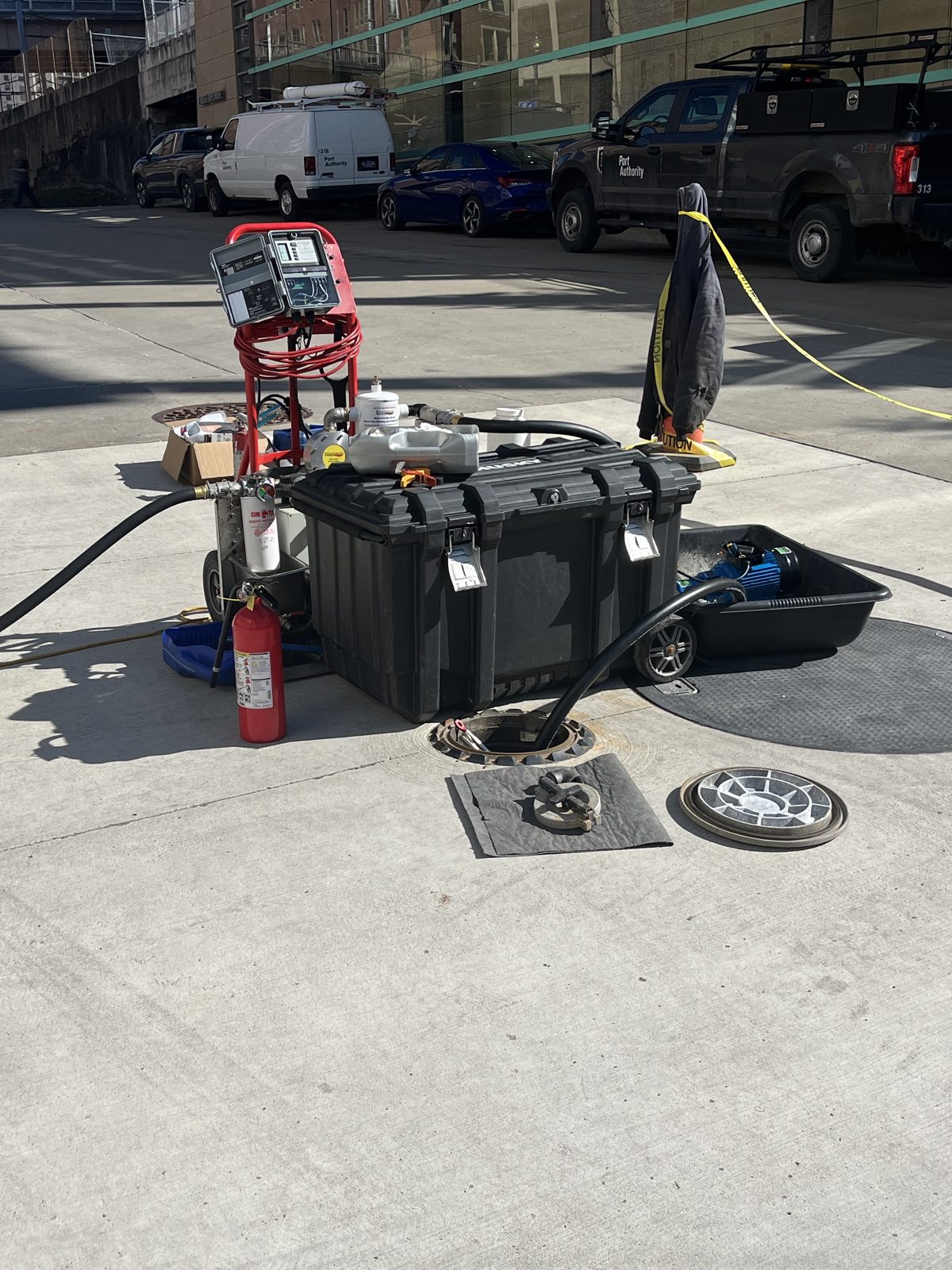
Fuel polishing is the process of circulating the diesel in your storage tank through filtration and water-separation equipment to remove the water, sediment, and contamination that build up while fuel sits. The clean fuel goes back into the tank ready for the next run.
It’s different from routine maintenance on the engine itself. Fuel polishing treats the fuel — the thing a standby generator depends on but rarely uses. On a system that starts only during an outage, the tank can hold the same diesel for a long time, and that’s exactly where problems develop quietly.
Diesel doesn’t stay the way it went into the tank. A few things work against it over months of storage, and they tend to compound.
You usually can’t tell fuel is bad by looking at the generator. These are the practical indicators that the diesel in the tank is worth a closer look.
A tank that shows water at the bottom, or that’s known to collect condensation, is a candidate for polishing before that water causes trouble.
Fuel filters that plug up faster than expected are a common sign there’s sediment or microbial growth in the supply feeding the engine.
Diesel that has been in the tank a long time, on a generator that rarely runs, is worth checking as part of your planned maintenance.
A standby generator has one job: start and carry the load when utility power fails. Clean fuel is part of what makes that possible. If the diesel in the tank is full of water and sludge, the engine can start and then stall as filters plug — during the exact event the generator exists for.
Fuel polishing fits alongside the rest of keeping backup power ready. It pairs naturally with load bank testing, which puts the generator under real demand and can surface fuel-related problems, and with regular planned maintenance, where fuel condition gets looked at. And if a generator does fail when you need it, our 24/7 emergency service is there.
It’s circulating the diesel in a storage tank through filtration and water separation to remove water, sediment, and microbial contamination, then returning the cleaned fuel to the tank. The goal is fuel that’s ready to run rather than fuel that clogs filters when the generator starts.
It depends on the tank, the environment, and how much the generator runs, so there isn’t a single interval that fits every site. Fuel condition is something we look at as part of planned maintenance, and we flag polishing when the fuel calls for it rather than on a fixed schedule.
Common signs are water collecting in the tank, fuel filters clogging faster than expected, and diesel that has simply been sitting for a long time. You often can’t tell by looking at the generator, which is why fuel gets checked as part of routine service.
We’re based in Butler and serve commercial and industrial customers across Western Pennsylvania, including the Pittsburgh area. See our service area.
2G polishes stored diesel for standby generator systems across the Pittsburgh region and surrounding Western Pennsylvania. Based in Butler, we cover facilities in and around Pittsburgh and the broader Western Pennsylvania service area.
Tell us about your tank and generator and we’ll help you get the fuel clean and ready. Based in Butler, serving Western Pennsylvania.
Active emergency? Call 412-335-3994